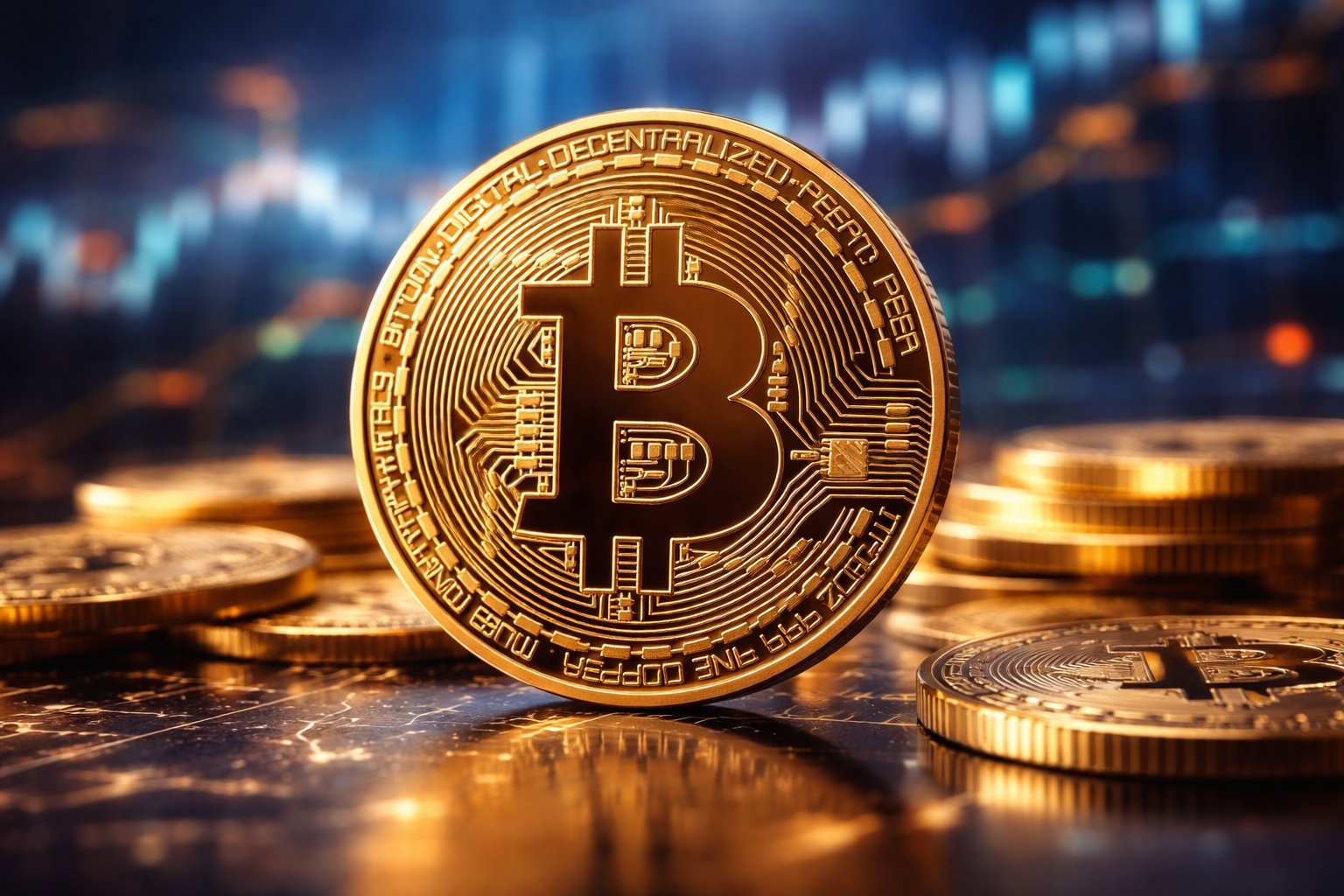

Bitcoin exists only as digital code on a blockchain. No physical bitcoins circulate as currency. But physical representations do exist in two forms: decorative novelty coins worth essentially nothing, and rare collectible coins containing private keys that unlock actual Bitcoin. The confusion stems from media images showing gold coins stamped with the Bitcoin logo, objects that blur the line between digital innovation and tangible collectibles.
Bitcoin Is Digital, Period
Bitcoin operates entirely as entries on a distributed ledger. When you own Bitcoin, you don’t possess anything physical. You control cryptographic keys that prove ownership of specific amounts recorded on the blockchain. Think of it as having the password to a bank account rather than cash in your wallet.
The blockchain itself exists across thousands of computers worldwide, each maintaining an identical record of every transaction since 2009. Your Bitcoin balance is simply a mathematical relationship between addresses and amounts, verified by network consensus every ten minutes.
This digital-only design is intentional. Bitcoin’s architecture eliminates physical vulnerability. No government can confiscate what doesn’t exist in physical space. No counterfeiter can replicate what has no tangible form. The absence of physicality is the feature, not the bug.
The Two Types of Physical Bitcoin
Collectible Novelty Coins
Most physical Bitcoin coins are worthless trinkets. Gift shops, promotional companies, and online retailers sell brass or gold-plated discs stamped with the Bitcoin logo. These serve as paperweights, desk decorations, or conversation starters.
They contain no cryptocurrency. No private keys. No blockchain connection. They’re as valuable as a souvenir coin from a theme park, purely symbolic representations of an idea. Some collectors pay modest premiums for particularly well-made examples, but the connection to actual Bitcoin is zero.
Loaded Physical Bitcoins
The interesting category involves coins embedded with private keys. These physical objects function as offline storage devices for real Bitcoin. A manufacturer generates a Bitcoin address, loads it with a specific amount (0.1 BTC, 1 BTC, 25 BTC), then seals the private key beneath a tamper-evident holographic sticker.
The mechanism is clever but simple. The coin displays a public address on its face, allowing anyone to verify the balance on a blockchain explorer. The private key remains hidden under the hologram. Break the seal, access the key, sweep the Bitcoin to a digital wallet. The physical object merely stores the password to digital wealth.
Companies like Casascius, Denarium, Titan Bitcoin, and Ballet created these products. Each took a different approach to materials, denominations, and security features, but the core concept remained consistent: bridge the digital-physical divide through cryptographic keys embedded in metal.
The Casascius Story
Mike Caldwell, a software developer in Utah, pioneered loaded physical Bitcoin in 2011. He minted coins under the name Casascius, offering denominations from 0.5 BTC brass coins to 1,000 BTC gold-plated bars. Each featured an eight-character identifier on the front and a holographic seal protecting the private key on the back.
The timing was perfect. Bitcoin traded between $2 and $30 in 2011. Physical coins offered early adopters a tangible way to gift or store their holdings when the entire ecosystem felt experimental and fragile. Caldwell produced roughly 28,000 coins before everything stopped.
In November 2013, the Financial Crimes Enforcement Network (FinCEN) informed Caldwell that minting loaded coins qualified him as a money transmitter. Federal registration and state licenses would be required. Rather than navigate that regulatory maze, Caldwell ceased production immediately.
The sudden halt transformed Casascius coins into genuine rarities. Today, intact coins with unbroken holograms command massive premiums at auction. A 2013 silver 0.1 BTC Casascius sold for $33,600 in 2021, roughly 500% above its Bitcoin face value. A 25 BTC gold coin fetched $1.69 million during the same bull market. Collectors prize them as artifacts from Bitcoin’s Wild West era.
Are Physical Bitcoins Worth Anything?
Value depends entirely on type and condition. Loaded coins contain two components: the digital Bitcoin balance and the collectible premium.
The Bitcoin component is straightforward. Check the public address on a blockchain explorer. If the wallet shows 1 BTC and Bitcoin trades at $65,000, that’s $65,000 in digital value, assuming the hologram remains intact and the private key hasn’t been compromised.
The collectible premium gets complicated. Rarity drives this component. Casascius coins, no longer produced and limited in original quantity, can trade for multiples of their loaded Bitcoin value. A 2011 Series 1 coin commands higher premiums than later series. Graded coins in perfect condition fetch more than circulated examples.
This creates the “peeling dilemma.” Breaking the hologram to access the Bitcoin destroys the collectible value permanently. A $100,000 collectible worth $65,000 in loaded Bitcoin becomes a piece of brass the moment you peel it. Collectors rarely redeem valuable coins. They hold them as complete objects, preserving both value components.
Unloaded or decorative coins hold only whatever collectors will pay for the physical object itself. Without embedded Bitcoin, value derives purely from aesthetics, materials, and collector demand for Bitcoin memorabilia.
How to Verify a Physical Bitcoin
Authentication requires multiple checks. Start with the hologram. Casascius holograms display a honeycomb pattern when peeled, making tampering obvious. Any signs of previous removal mean the private key could be compromised. The coin might look intact but contain zero Bitcoin.
Query the public address on a blockchain explorer like Blockchain.com or Blockstream.info. The balance should match the coin’s stated denomination. An empty wallet means someone already swept the funds.
Research the manufacturer thoroughly. Established brands like Casascius, Denarium, and Titan Bitcoin maintained production records and verification databases. Cross-reference serial numbers against official lists when possible. Unknown manufacturers or suspiciously cheap prices suggest counterfeits.
Physical condition matters for collectibles. Examine materials, engraving quality, and overall craftsmanship. Legitimate loaded coins used precious metals and professional-grade production. Flimsy brass or poor stamping indicates a novelty item, not a loaded coin.
Buy only from reputable sources. Auction houses like Stack’s Bowers specialize in physical cryptocurrency and provide authentication services. Private sales carry enormous risk without expertise to verify authenticity.
Should You Buy Physical Bitcoin?
For practical Bitcoin storage, physical coins make no sense in 2026. Hardware wallets from Ledger or Trezor offer superior security, easier backup procedures, and none of the physical theft vulnerability. A thief who steals a loaded coin steals your Bitcoin instantly. A stolen hardware wallet remains locked behind a PIN, buying you time to recover funds using your seed phrase.
Physical coins also create awkward inheritance and liquidity issues. Your heirs need to understand what they’re holding and how to access it. Selling requires finding specialized buyers willing to pay collectible premiums. Converting to cash means navigating niche markets.
Regulatory gray areas persist. Producing loaded coins likely requires money transmitter licenses in most jurisdictions. Even owning them raises questions in countries with strict cryptocurrency regulations. The legal landscape remains unsettled.
Physical Bitcoin makes sense in limited contexts. As gifts, they provide a tangible introduction to cryptocurrency for skeptics who resist purely digital concepts. As collectibles, rare Casascius and Denarium coins represent genuine pieces of Bitcoin history worth preserving. As investments, high-grade examples from defunct manufacturers may appreciate beyond Bitcoin’s price movements.
Current options in 2026 center on Ballet cards and secondary markets for vintage coins. Ballet produces wallet cards loaded with small denominations, marketed as gifts rather than serious storage solutions. Vintage Casascius and Titan coins trade primarily through specialized auction houses and private collectors.
The Confusion With Bitcoin ETPs
Adding to the confusion, financial products use “physical Bitcoin” terminology with completely different meaning. Exchange-traded products (ETPs) from ETC Group, WisdomTree, and CoinShares describe themselves as “physical Bitcoin” funds.
These products hold actual Bitcoin in cold storage custody, distinguished from synthetic products tracking Bitcoin through futures contracts. The “physical” label means the fund owns real BTC, not that any physical coins exist. It’s institutional finance language creating unnecessary confusion with physical coin collectibles.
Spot Bitcoin ETFs approved in the United States in 2024 follow the same model. They’re “physically backed” by Bitcoin held in custody, but no metal coins are involved anywhere in the structure. The terminology collision frustrates newcomers trying to understand the space.